
Welcome to the Civil Rights Unit (CRU) Sanctuary Promise Community Toolkit!
The CRU Sanctuary Promise Community Toolkit is a free, online resource for those seeking to understand Oregon’s sanctuary laws and help ensure that our communities are safe for all. Everyone has the right to live, work, play, and learn safely in Oregon. This toolkit covers the essential information needed to understand, report, and combat violations of Oregon’s Sanctuary Promise Laws.
The Community Sanctuary Promise Toolkit provides you with information about the following questions:
- Open All
Oregon is a Sanctuary State. What exactly does that mean?
- Oregon's sanctuary laws are complex and nuanced. Broadly, Oregon law prohibits state and local government, including police, from helping to enforce federal immigration laws without an order signed by a judge. In Oregon, our laws state that everyone can live, work, play, go to school, report a crime to police, go to court, and access government services without fear that a state or local government employee will report you to ICE. If you suspect a violation of these laws, you can report to the Sanctuary Promise Hotline. However, federal immigration authorities like ICE can and do operate in Oregon. Oregon's sanctuary laws do not stop deportations or federal prosecutions for immigration-related crimes in Oregon. For a detailed review of Oregon's sanctuary laws, check out Oregon DOJ's Law Enforcement Bulletin.
What are protected or sensitive areas? Are places like schools, hospitals, and houses of worship considered protected/sensitive areas?
- Oregon law ORS 181A.828 » states that an individual attending a court proceeding as a party, witness, or their family member may not be subject to civil arrest without a judicial warrant when the individual is in a court facility or traveling to or from court.
Other sensitive areas—such as schools, houses of worship, and hospitals—are not protected under Oregon law.
Be aware that as of January 2025, ICE and federal immigration authorities may seek to take actions in sensitive areas like schools, houses of worship, and hospitals. On January 20, 2025, the federal government rescinded an October 2021 U.S. Department of Homeland Security policy memo » that protected certain essential service areas—such as schools, houses of worship, and hospitals—from immigration enforcement, replacing it with a directive that gives ICE agents authority to take enforcement actions in any of these spaces.
- Here is the ICE memo Common Sense Enforcement Actions in or Near Protected Areas », issued January 31, 2025, by Acting Director Caleb Vitello
- Here is the U.S. DHS press statement » regarding the new directive.
- Here is additional information from ICE's website on Protected Areas and Courthouse Arrests »
Public Schools
Public schools in Oregon have a legal obligation to educate every child between the ages of 5 through 19 who has not completed the 12th grade, regardless of their actual or perceived immigration status or their parents’ immigration status. See Plyler v. Doe, 457 U.S. 202 (1982) » The Oregon School Boards Association and Oregon Department of Education have issued a January 22, 2025 joint statement » and a Frequently Asked Questions (FAQ) document » regarding immigration enforcement and student and family safety at Oregon schools. The Oregon Department of Education has released new guidance Supporting All of Oregon's Students: Guidance for protecting and upholding the rights of immigrant students in Oregon’s K-12 public schools », linked on their Immigrant and Refugee Student Success landing page ». The Oregon Department of Education has issued a DACAmented/Undocumented Toolkit » to ensure schools and their staff create and maintain a welcoming environment for all students, families, and employees in Oregon’s schools. How do I prepare myself and my family for encounters with ICE or other federal immigration authorities?
- Family Preparedness Packets:
- Immigrant and Refugee Community Organization's (IRCO) Know Your Rights preparedness packet
- Oregon Law Center (OLC) and Latino Network's Family Preparedness Packet:
- Immigrant Legal Resource Center's (ILRC) ILRC Family Preparedness »
- The ILRC’s Red Cards » (in 18 languages) help people assert their rights and defend themselves in many situations, such as when ICE agents go to a home.
- ILRC's Know Your Rights and What Immigrant Families Should Do Now in English » | Spanish » | Chinese » | Korean » | Arabic » | Russian » | Tagalog » | Vietnamese »
- Latinx Alliance of Lane County and United for Immigrant Justice's Family Preparedness: Guide for Immigrant Families
- Immigrant Defense Project's infographics on ICE Tactics »
- National Immigration Law Center's Know Your Rights at Home and at Work »
- National Immigrant Justice Center's How to Avoid Immigration Fraud and Scams »
- United We Dream's Know Your Rights Scenarios »
- ACLU's Know Your Legal Rights to be prepared for an interaction with ICE. Resources are available in English, Spanish, and Mandarin »
- League of United Latin American Citizens (LULAC) has published El Pueblo Unido: A Resource Guide for Community Leaders». This comprehensive Know Your Rights guide is both for individuals (at home, work, in the car, out in public, in a private setting, at the airport, or in schools), as well as for community leaders in schools, churches, healthcare, and work settings. Materials are available in English» and Spanish»
- The Mayan League has produced Know Your Rights materials in Maya Mam»
- ACLU has created a series of videos to inform and empower community members called We Have Rights: What to Do When Interacting with ICE
- We Have Rights: When ICE is Outside our Doors
- View in: English » | Spanish » | Urdu » | Arabic » | Haitian Creole » | Russian » | Mandarin » | French »
- Remember, we have rights if ICE is outside our doors:
- do not open the door
- ask to see a warrant signed by a judge
- tell them you do not consent to them being at your home
- tell them please leave
- We Have Rights: Inside Our Homes
- View in: English» | Spanish » | Urdu » | Arabic » | Haitian Creole » | Russian » | Mandarin » | French »
- Remember, we have rights if ICE enters our homes:
- tell them you do not agree to their presence or search
- ask to see a warrant signed by a judge
- do not interrupt an arrest
- We Have Rights: In Our Communities, In Our Streets
- View in: English » | Spanish » | Urdu » | Arabic » | Haitian Creole » | Russian » | Mandarin » | French »
- Remember, we have rights if ICE stops us in our community:
- remain silent
- ask to speak to a lawyer
- say you do not agree to their search
- We Have Rights: If ICE Arrests Us
- View in: English » | Spanish » | Urdu » | Arabic » | Haitian Creole » | Russian » | Mandarin » | French »
- Remember, we have rights if we are arrested by ICE:
- remain silent
- ask to speak to a lawyer
- do not sign anything
- We Have Rights: When ICE is Outside our Doors
- ACLU Video, Stopped While Driving in English and Spanish: Watch here »
- Immigrant Defense Project » and Surveillance Resistance Lab » produced this informational webinar called Be Informed: What is ICE? How do they Operate? »
- Oregon Justice Resource Center (OJRC) published this Know Your Rights webinar», slide deck », and resources website»
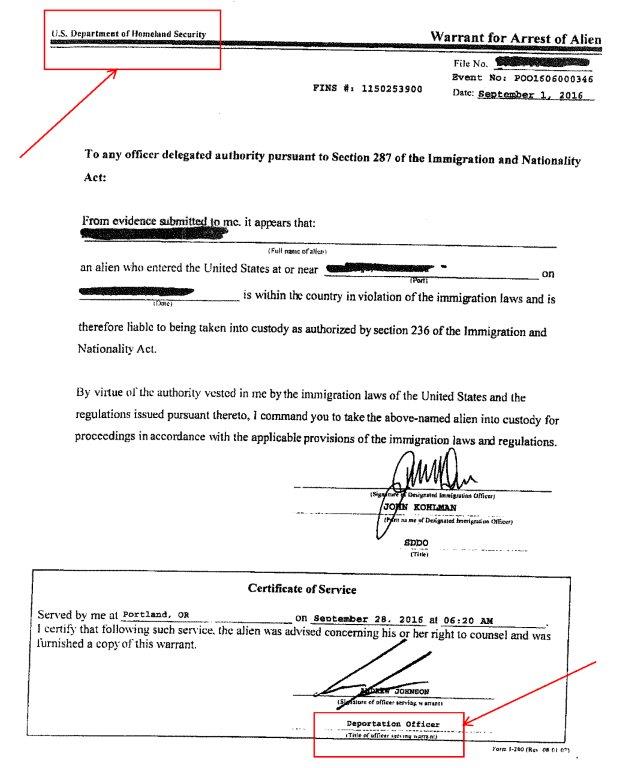
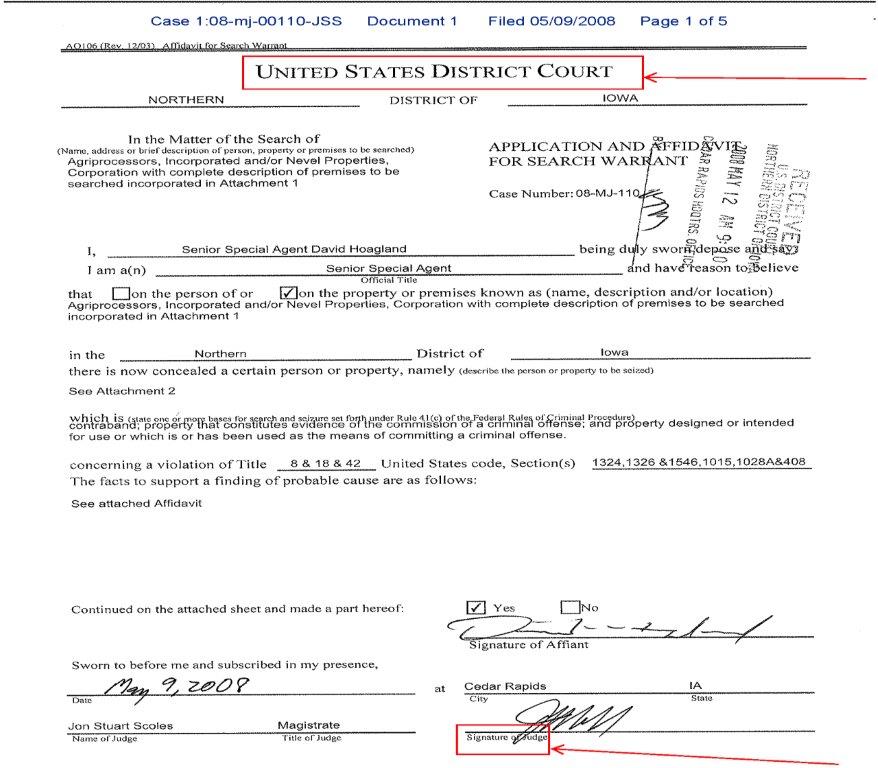
- Warrants for immigration arrests that comply with Oregon's sanctuary laws must be:
- issued by a federal court and
- signed by a judge
- Oregon state/local law enforcement may arrest a person if there is a "warrant of arrest issued by a federal magistrate" (ORS 181A.820(5), emphasis added). Oregon law prohibits state/local law enforcement from acting on civil/administrative warrants issued by federal immigration authorities.
- Here are some examples of warrants:
- Sample Administrative/Civil Warrant not compliant with Oregon's sanctuary laws. Note it is issued by DHS (not a federal court) and signed by an immigration officer (not a federal judge).
- Sample Judicial Warrant that is compliant with Oregon's sanctuary laws. It is issued by a federal court and signed by a federal judge.
- Note that a warrant may in certain circumstances be signed by a clerk of the court per Rules 9 and 4 of the Federal Rules of Criminal Procedure.
- ACLU Video example of warrant in Spanish: ACLU Video »
Is there a place I can call to report ICE or other federal immigration authorities active right now in my community?
- Portland Immigrant Rights Coalition », aka PIRC, 1-888-622-1510 - to report ICE activity right now anywhere in Oregon
- United We Dream », 1-844-363-1423 or text 877877 - to report any incidents of raids or abuses/ mistreatment by ICE, police, or border patrol.
- ICE's Online Detainee Locator System »
- More information on locating someone who may have been held by ICE »
- If you know the facility where the person is being held, contact the immigration detention facility » directly.
- Tacoma Detention Center aka Northwest ICE Processing Center (NWIPC) », 253-779-6000, 1623 E J Street, Suite 2, Tacoma, WA 98421-1615, United States
What protections do I have at work?
- Under state and federal law (29 U.S. Code § 657 »), employers are required to notify workers if there is going to be a federal agency inspection of records or other documentation used to verify workers' identity and employment eligibility. This inspection is often called an I-9 inspection. Unless prohibited by federal law, employers must provide notice of the inspection to employees within three business days of receiving a notice from the federal agency.
Oregon's Bureau of Labor and Industries (BOLI) has more information about federal inspections » and legal requirements for this process.
The National Immigration Law Center (NILC) » has produced several resources regarding workplace rights:
- Know Your Rights Guide: Worksite Raids » for impacted workers, communities, and employers.
- A Guide for Employers: What to Do if Immigration Comes to Your Workplace », also available in Chinese », Korean », Spanish », and Thai ».
After an encounter with ICE or other federal immigration authorities, what information should I write down?
- Gather any and all evidence after an interaction with federal immigration authorities.
- Write down:
- the date, time, and exact location where the interaction occurred;
- what you were doing;
- the names and contact information of anyone you were with;
- the names and contact information of any witnesses;
- all officer names involved, including physical descriptions, and badge numbers;
- note the vehicles they were driving, including unmarked cars' color/make/model, and patrol numbers if visible;
- the details of what happened, including start and end times.
- Ask for business cards of any officers involved.
- Take pictures of any warrants shown/presented to community members.
- Take and forward pictures or videos of any documents, officers, interactions, and all parties involved to a trusted friend or family member.
- Have a plan for what to do if a family member is arrested or detained, including who to call.
I have heard information about a new requirement for immigrants to register with the federal government. What should I know?
- The U.S. Department of Homeland Security announced the U.S. Citizenship and Immigration Services' website ». Please note that information on federal government webpages is changing frequently, and may not reflect court rulings such as injunctions stopping or changing these requirements.
The National Immigration Law Center (NILC) has published critical information for community members, including potential risks such as detention, deportation, and legal consequences:
- Know Your Rights regarding the Registration Requirement for Immigrants »
- Conozca sus derechos: Requisitos para el registro de inmigrantes »
What should I do if I am profiled about my national origin related to immigration enforcement?
Profiling is Illegal
Profiling is when law enforcement target individuals based on race, skin color, national origin, or language, and it is unlawful.Profiling Defined under Oregon law
Oregon law defines profiling under ORS 131.915 » as "the targeting of an individual by a law enforcement agency or a law enforcement officer », on suspicion of the individual’s having violated a provision of law, based solely on the individual’s real or perceived age, race, ethnicity, color, national origin, language, sex, gender identity, sexual orientation, political affiliation, religion, homelessness or disability, unless the agency or officer is acting on a suspect description or information related to an identified or suspected violation of a provision of law." (emphasis added) Oregon's law does not include immigration officials in its definition of law enforcement. Individuals can make profiling complaints and obtain a response with the final disposition of any investigation of a reported complaint. Oregon law ORS 131.920 » requires every law enforcement agency to have:- written policies and procedures prohibiting profiling,
- a profiling complaint process,
- a profiling investigation process that includes a response with a statement of the final disposition of the complaint, and
- transparency of the investigation process that includes reporting specific information to the Law Enforcement Contacts Policy and Data Review Committee.
Recourse
Both Oregon and federal law allow individuals to file tort claims (lawsuits) against government agencies engaging in profiling.- For information about your rights and legal options, consult an attorney ».
- The Native American Program of Legal Aid Services of Oregon » (NAPOLS) is a nonprofit law office nationally recognized for specializing in the protection of Indian rights. (503) 223-9483
What do I do if a community member is targeting or threatening me based on my national origin?
- You may be the victim of a bias incident or bias crime or other criminal conduct. You can contact local law enforcement to report the conduct. You may also want to report the conduct or incident to the Bias Response Hotline to discuss reporting options, make a safety plan and get resources.
How can I report a suspected violation of Oregon’s sanctuary laws?
- Anyone can report a suspected violation of Oregon’s sanctuary laws. Community members can report to Oregon's Sanctuary Promise Hotline by:
- Calling the Sanctuary Promise Hotline in any language at 1-844-924-STAY (7829). We accept all Relay calls. Live advocates are available 9am-5pm Monday-Friday. Leave a voicemail after hours.
- Calling the Sanctuary Promise Hotline in Spanish at 1-844-6-AMPARO (1-844-626-7276). We accept all Relay calls. Live advocates are available 9am-5pm Monday-Friday. Leave a voicemail after hours.
- Reporting online any time and in any language at SanctuaryPromise.Oregon.gov or PromesaSantuario.Oregon.gov (Spanish language website);
What happens when Oregon DOJ opens an inquiry on behalf of the state about a reported sanctuary law violation?
- Oregon DOJ can inquire into possible violations of sanctuary law, if the targeted individual consents to the inquiry. Under current Oregon sanctuary laws, Oregon DOJ does not have investigation or enforcement powers. Instead, the vision behind HB 3265 », Oregon’s Sanctuary Promise Act, was for Oregon DOJ to be a resource for potential targeted individuals and their families, and for Oregon DOJ to work with agencies that need to understand the law and/or may have been violating the law. Oregon DOJ can intervene in a non-punitive way with agencies subject to the law to improve compliance with sanctuary laws.
Do Oregon DOJ inquiries result in conclusions or findings?
- As the current laws are written, inquiries will not result in a finding of "violation" or "no violation." Oregon DOJ is required to ask a public body or agency about a possible violation and publish their response. ODOJ does not have authority to open an investigation or make findings regarding whether the public body or agency violated sanctuary law.
Why should someone report a sanctuary law violation?
Ensuring Our Communities Are Safe
By reporting sanctuary law violations, you contribute to creating a safer environment for all Oregonians. We all have a role to play. Although Oregon DOJ is unable to halt or intervene in federal immigration enforcement as a state-level public agency, we can work towards a strong commitment to sanctuary laws so that everyone has equal access to public services-- like reporting a crime to law enforcement, participating in the court system, accessing public schools, getting check-ups at public health clinics, and more. Sanctuary laws are intended to ensure safe and accessible services for the community.Report and Support
The “Report and Support System” is designed to help Oregon DOJ inquire about suspected violations to Oregon’s Sanctuary Promise Act and provide support where possible. If you see something, say something. If you suspect a violation, please report it! Advocates on the hotline are multilingual and identify as members of the communities we support. Interpretation services are available in 240+ languages. We want to:- Support those who witnessed, have been targeted in, or impacted by violations of Oregon’s sanctuary laws.
- Refer witnesses, targeted individuals, and community members to services that can help.
- Track violations and inform the public about who is violating Oregon’s sanctuary laws and if there are trends.
Data and Confidentiality
Part of the Sanctuary Promise Act is about data transparency--knowing what's happening around our state. When a person reports to the Sanctuary Promise Hotline, after any inquiry is complete, the de-identified data will be published in the Criminal Justice Commission's annual report. The name and contact information of the reporting person or targeted individual will not be shared publicly (without a subpoena; for more information, see How data is stored and protected,) but the publicly agency reported to have violated these laws will be listed.Recourse
See the Question below about legal recourse that may be available after a violation of Oregon's sanctuary law(s).What legal recourse do I have if Oregon’s sanctuary laws are violated?
- Oregon law allows any person to file a civil suit/bring a civil action against a public body or agency that violates these laws. Oregon Sanctuary Promise Hotline advocates can help connect you to resources and legal agencies to understand what your civil legal options may be.
What attorney resources can you share with me?
- Oregon DOJ is not allowed to refer you to or recommend a specific attorney. This list does not suggest the attorney has been vetted or endorsed by Oregon DOJ.
- Equity Corps of Oregon » (ECO) for universal representation, 1-888-274-7292
- In order to be eligible for ECO you must:
- 1) Be an Oregon resident;
- 2) Make less than 200% of the Federal Poverty Guideline as a household; and
- 3) Be in danger of removal or experiencing a civic exclusion on account of immigration status.
- In order to be eligible for ECO you must:
- Oregon Law Center » (OLC), phone number varies by location in Oregon, 503-485-0696
- Pueblo Unido PDX », 503-360-0324
- Call toll-free from a Detention Center: 503-912-8925 (intake line open Tuesdays and Wednesdays 9am-5pm)
- Collective of Indigenous Interpreters of Oregon », 503-360-0314
- SOAR Immigration Legal Services », 503-384-2482
- Northwest Immigrant Rights Project », 503-525-8454
- Lutheran Community Services Northwest » (LCSNW), 206-901-1685
- Immigration Counseling Service » (ICS), 503-221-1689, lquintero@ics-law.org
- The American Immigration Lawyers Association » (AILA)
- Catholic Charities of Oregon », 503-231-4866
- ACLU of Oregon », 503-227-3186
- City of Portland Resource Guide for Immigrants and Refugees »
- Freedom for Immigrants »
- Oregon State Bar »
- U.S. DOJ's Recognition and Accreditation Program » began over 60 years ago to increase the availability of competent legal representation for low-income and indigent persons in immigration proceedings. The program allows certain individuals – specifically, non-attorney employees and volunteers of qualifying non-profit organizations – to practice immigration law before the federal government. Here is the regularly updated Recognized Organizations and Accredited Representatives Roster by State and City ».
- Center for Nonprofit Legal Services », 541-779-7292
- IRCO Immigration Legal Resources », 971-271-6537
- Student Legal Services - Portland State University », 503-725-4556
- Services only available to PSU Students
- Centro de Servicios para Campesinos de PCUN », 503-982-0243
- CLEAR Clinic », 971-722-5258
- Equity Corps of Oregon » (ECO) for universal representation, 1-888-274-7292
Oregon sanctuary laws are directed at "public bodies" and "law enforcement agencies." How are those terms defined?
- “Public body” is defined in ORS 174.109 » as state, local and special government bodies. This means Oregon state, county, city, and special government agencies are all public bodies. There are many public bodies in Oregon.
- Some examples of Oregon public bodies are included in this list. This is not an exhaustive list.
- A listing of Oregon’s state agencies can be found here ».
- “Law enforcement agency” is defined in ORS 181A.822(4) » as:
- city and university police departments
- Oregon State Police
- State and local police and sheriffs and their deputies
- Corrections officers
- “Officer” means an individual employed or contracted as an officer of a law enforcement agency whether or not the individual is on duty. ORS 181A.822(5) »
- The laws specify that law enforcement officers/deputies/agents/troopers/etc., both employed or contracted, whether they’re on or off duty, must follow these laws.
- “Public body” is defined in ORS 174.109 » as state, local and special government bodies. This means Oregon state, county, city, and special government agencies are all public bodies. There are many public bodies in Oregon.
There’s a lot of technical language in immigration law and sanctuary law. What do all those terms mean?
- The ODOJ Civil Rights Unit has created a glossary of terms » that you can reference.
As an ally or community organization, what can I do to support immigrant community members?
Community Organizations
- Create a communication chain (using WhatsApp or phone lines)
- Gather a local response network of attorneys, legal services, counseling options, and advocates
- Create a team who safely can dispatch and verify if there's local ICE activity
- Provide/host Know Your Rights workshops
- Share Know Your Rights cards
- Share Family Preparedness plans, which should include:
- power of attorney documents
- guardianship papers
- important documents organized and accessible
- Encourage families to gather important documents and information:
- Important names and phone numbers (family & consulate & attorneys)
- Copies of IDs and passports (especially child's passport; including work permits)
- Copies of all immigration papers (including receipt notices for any pending and approval cases)
- Birth certificates (with English translations) (good idea to obtain an original birth certificate for your child)
- Marriage certificates (with English translations)
- Social Security cards
- Other important information such as a list of medications family members take
- Update children's school emergency contact information
- Child's immunization records
- Establish safe spaces: identify community centers, churches, and other locations where families can temporarily seek shelter or support during ICE activity
- Establish contact with media/newspapers
- Train trusted community members to be spokespeople to share urgent information with media
- Beware of overstepping and good intentions
- Only attorneys should give legal advice
- Know Your Rights trainings should be vetted and established
Individuals
-
- Print out and distribute Red Cards and Know Your Rights cards
- Share Family Preparedness plans
- Contact your elected officials to share concerns about local, state, and federal government law and policy matters, and to request law changes. Use this link » to identify and contact your elected officials.
- Invite the Governor to events and/or share your opinion with her here »
- Report impact of federal action to the Oregon Attorney General’s Federal Oversight and Accountability cabinet »
- Stay current on what litigation is occurring in response to federal action by reading the Oregon AG's media releases » (and sign up to receive the Oregon AG’s media releases in your inbox here »)
- Attend townhall meetings to voice concerns (stay informed through grassroots and nonprofit organizations)
- Stay up to date with what is happening in other sanctuary states
- Contact local nonprofits and grassroots organizations doing rapid or emergency response and consider volunteering
- Consider becoming a legal observer; contact ACLU and other nonprofits for training
- Call PIRC to report ICE activity
- Educate yourself. Know what Oregon sanctuary laws say, and what the laws' limitations are.
- Sign up to host an information session on Oregon’s sanctuary laws and the Sanctuary Promise Hotline.
- A recorded information session is available here ».
- If your community becomes aware of a possible sanctuary law violation, coordinate so that one person makes a report to ensure the Sanctuary Promise Hotline has the information. Witnesses, targeted individuals, family members, and whistleblowers are always encouraged to contact the Sanctuary Promise Hotline directly or via an ally/support person.
- Beware of overstepping and good intentions
- Only attorneys should give legal advice
- Know Your Rights trainings should be vetted and established
This toolkit is designed to empower you with the knowledge and resources about Oregon’s Sanctuary Promise Laws.
You can always contact Oregon’s statewide Sanctuary Promise Hotline to talk about your options. We welcome your call or online report.
Disclaimer: The links and information provided on these pages are for information only, are not exhaustive, and do not constitute legal advice. Not all content reflects the views of the Oregon Department of Justice. To create agency policy or to obtain advice regarding a specific communication or request from a federal immigration authority, consult your agency counsel. For information about your rights and legal options, consult an attorney ».
Request a Sanctuary Promise Presentation for your Community
The Oregon DOJ Civil Rights Unit provides information sessions for community groups on Oregon’s sanctuary laws and Sanctuary Promise Hotline. A recorded information session is available here ». Please sign up below if you are interested in a live information session.